
Hand an auditor a dated PDF, not a login
Every report carries its collection date and the estate it covers. A committee reads it with no account and no training, and it says the same thing the screen said.
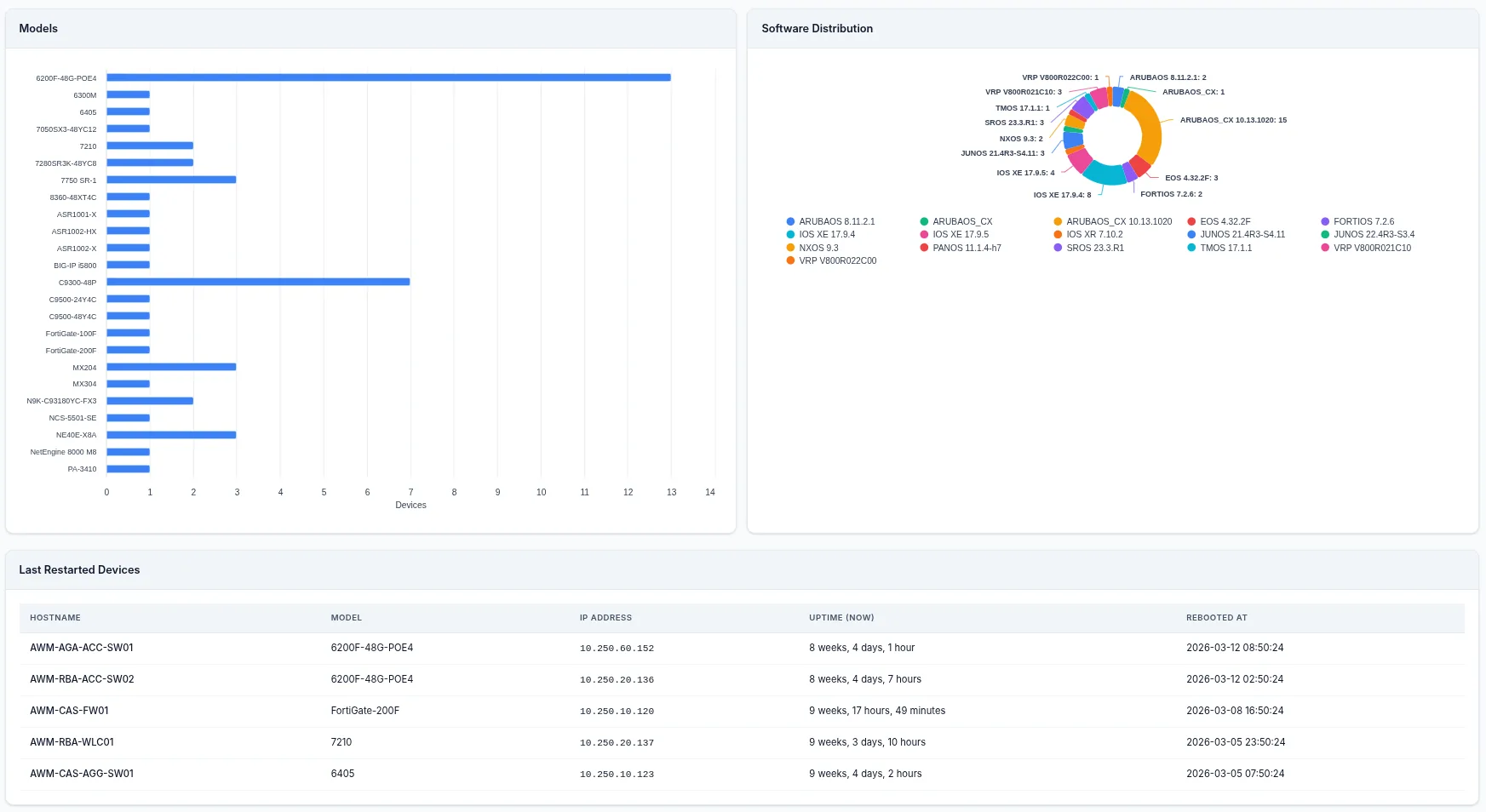
Three readers, three documents, one collection
- The engineer wants the complete list, sortable, exportable. They work in the tool and export to act.
- The manager wants a summary: how many devices affected, the trend since last quarter, what to prioritise.
- The auditor wants the detail: which rule, on which device, on what date, with the configuration extract the finding came from.
- All three come from the same collected data. Producing them by hand three times is the work this module removes.
- Rendered to PDF asynchronously: a report over a large estate prepares itself while you work elsewhere.
One collection, three documents, and what each one leaves out
The three documents are not three different write-ups of the same facts. Each keeps part of the collection and sets the rest aside, and that discarding is what makes each one readable for its reader.
The engineer
- Hostname and model
- Serial number
- Software version
- Interfaces and VLANs
The manager
- Devices affected, by site
- Trend since last quarter
The auditor
- Named rule and its identifier
- Date of the collection
- Configuration extract behind the finding
Kept by nobody
- Raw session transcript
- Internal queue timestamp
Two rows go nowhere: they are used to produce the three documents without appearing in any of them.
What the module brings
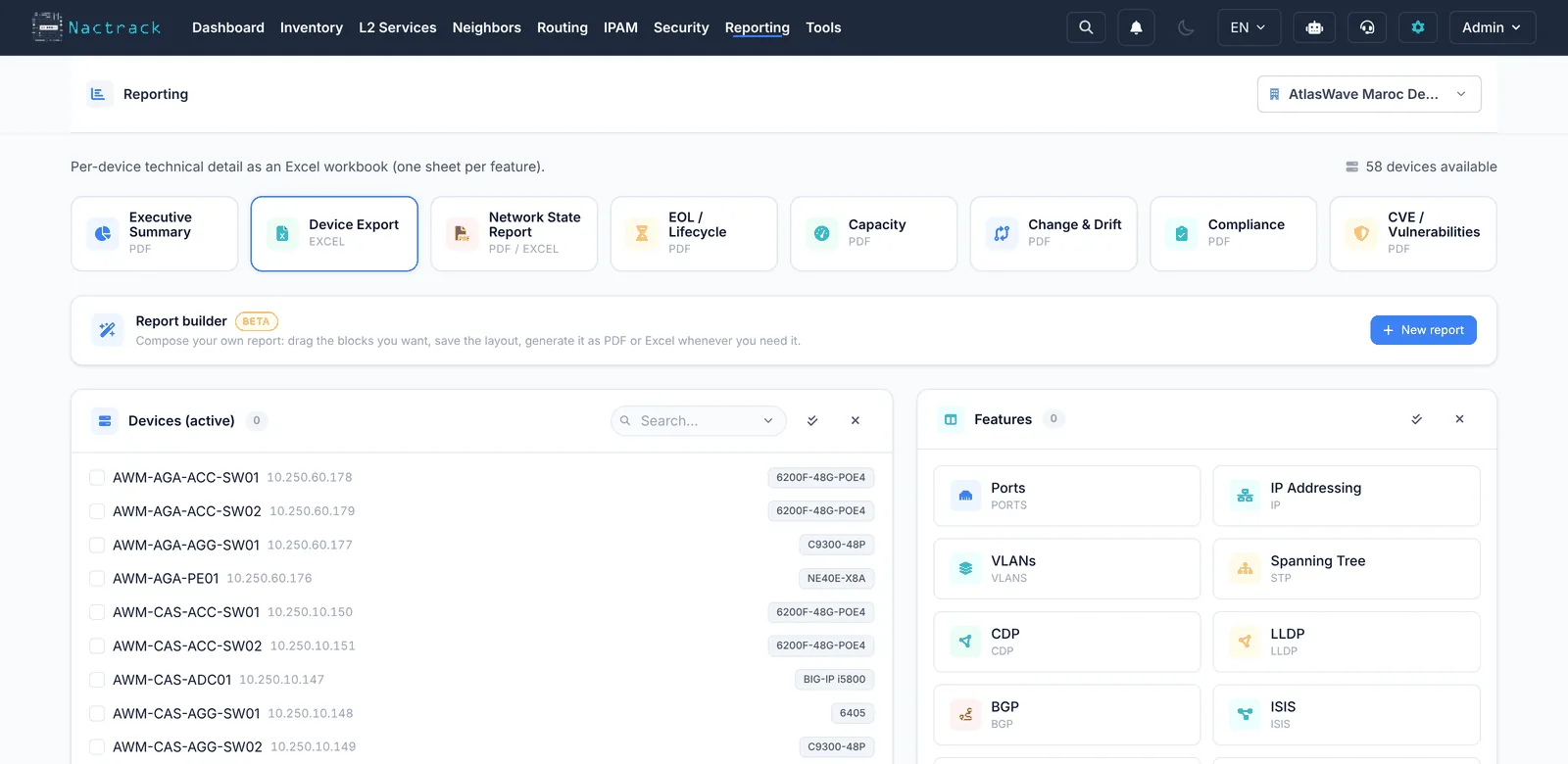
See a report on your own estate
During the trial, reports are produced from your own collections.