
Product
See which subnets are actually full
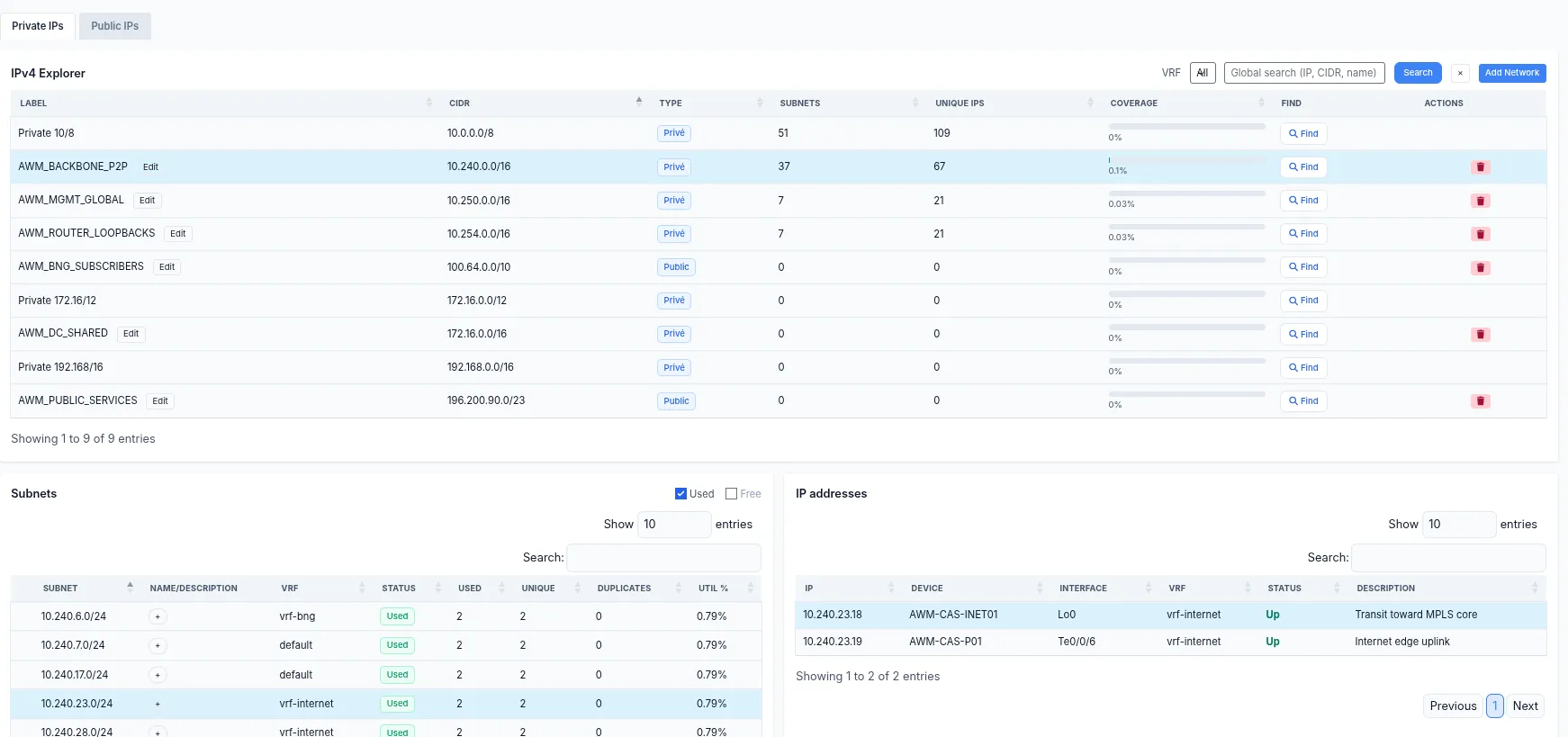
The IPAM starts from the addresses your interfaces really carry, not from what a spreadsheet reserved. Blocks, subnets, and the utilisation counted on the devices.
Two sources
Two sources, two meanings
- An address read off an interface says a network is configured there.
- An address seen in an ARP table says an endpoint actually spoke.
- Those are not the same fact. Confusing them leads to wrong conclusions.
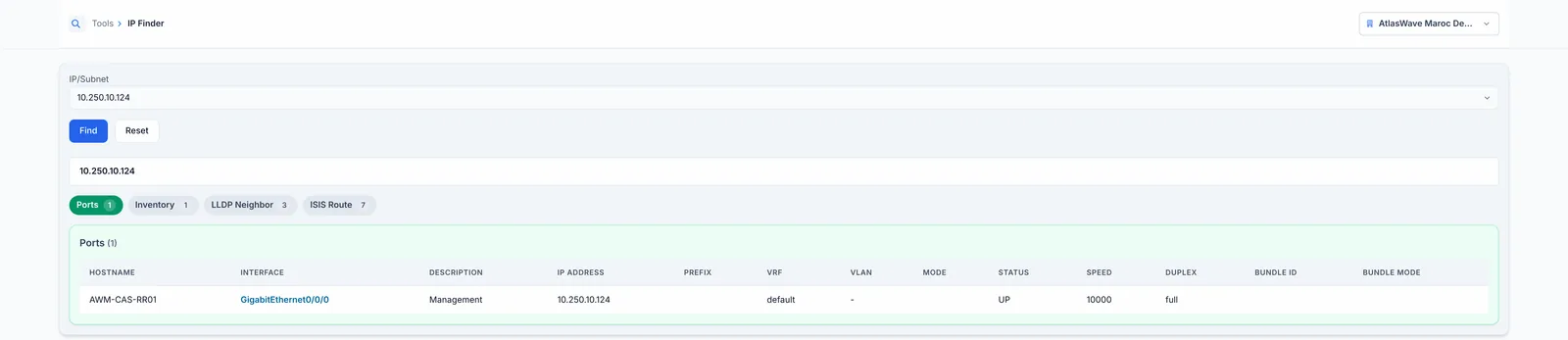
- The IPAM keeps them apart and names the source that answered on every result.
- A block reserved in the plan, configured on two interfaces and empty of any endpoint: three states, three different conclusions.
- Utilisation shown is what was observed, not what was declared.
The uses
What this is actually for
Before adding a site, a service or a range: what is free, and is it genuinely free. A hand kept plan answers with what was reserved. The network answers with what is configured and what speaks.
The other use is conflict: one range used in two places, or a management address reused after a device swap. Those are deferred outages, and they show as soon as both sources are joined.
- Blocks and subnets, with their utilisation
- Addresses carried by the interfaces
- Endpoints seen in ARP tables
- The source named on every result
- Conflicts and reuse made visible