
Know what is on your network, and what it is exposed to
Three questions come up in every security committee and every audit. NacTrack answers each one with a dated figure you can put on the table.
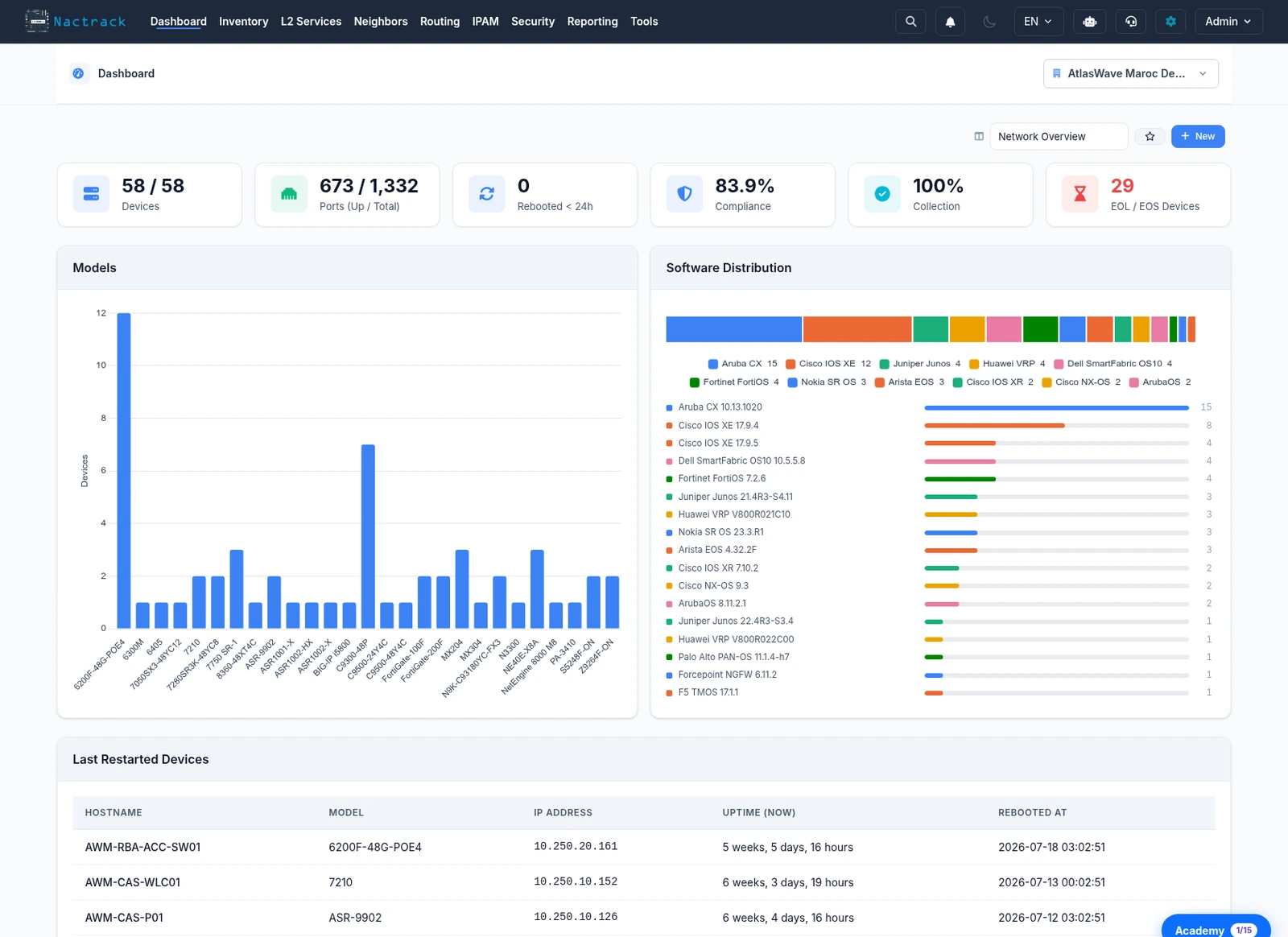
The three questions
- 1
What exactly do we own?
Models, software versions, sites. The usual answer is a file built during an old project. The question turns serious when an auditor asks to cross-check it.
- 2
What are we exposed to?
Which devices a published vulnerability can reach, by exact version, and which are no longer supported by their vendor. Two lists, and they decide a budget.
- 3
What can we state?
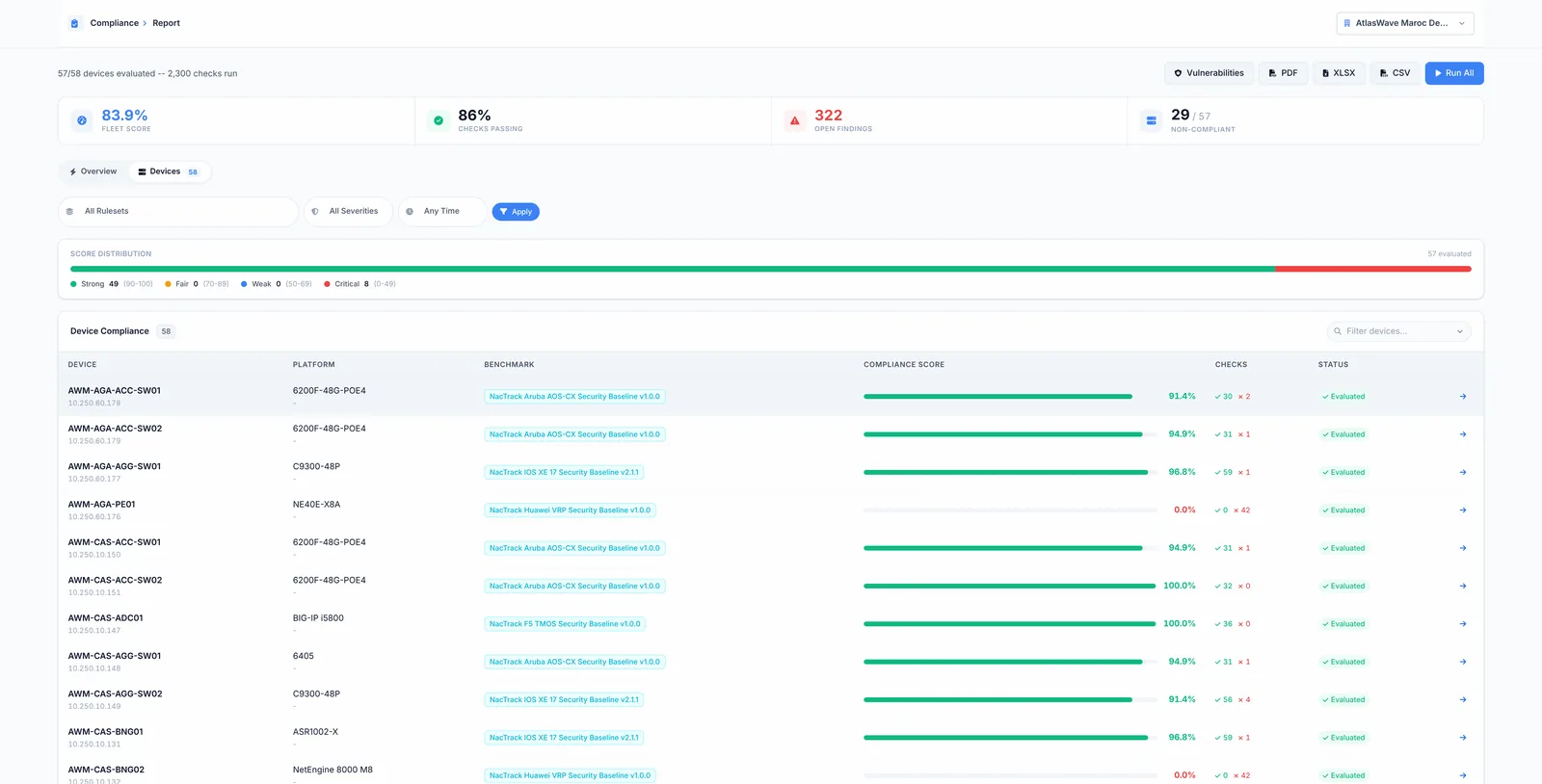
A number without evidence does not hold in a meeting. Every compliance finding carries the rule applied and the configuration extract that triggers it.
That is the difference between a report that gets argued with and a report that gets acted on.
The report you show
The two risks this addresses
Regulatory risk. An audit asks for a current inventory, a hardening state and exposure tracking. Produced by hand, it ties up a team for weeks and is stale a month later.
Continuity risk. A device past vendor support becomes unrepairable without warning, and that is discovered on the day it fails.
Neither is an advanced security risk. Both are inventory risks.
Each sector raises them with constraints of its own: critical infrastructure, the public sector, telecom operators.
- Installed on your infrastructure, your configurations stay there
- No agent installed on the devices
- No change window needed
- Dated, exportable reports that belong to you
See it on your own network before discussing it
Your team can try it for 30 days on your network, with no commitment. The one-day audit produces a report that belongs to you, whether or not anything follows.